
What is the difference between a panic attack and panic disorder?
A exploration of panic attacks and panic disorder.

Insights into My Week
Last weekend I had a panic attack. This is not a common occurrence for me at all, and was due to a number of stressful things adding up. I also ignored the signs that things were adding up in addition to not leaning into the things that I know help. This week has been a lot better, for those worried about me, and there are things I changed to ensure that doesn’t happen again. The last panic attack I had was when I was about 15 years old, so one every 14 years is quite good odds!
It got me thinking though about the intensity of a panic attack and how the physical symptoms can be scary for a lot of people. Even whilst I was having the panic attack I was able to rationalise the physical symptoms because of my background, but for those who do not have this knowledge it could be quite terrifying. I wanted to write about panic in today’s blog so that I could hopefully bring some understanding to people who experience them.
Insights to Take Away
The first thing to clarify is the difference between panic attacks and panic disorder. Panic attacks are intense physical sensation and significant feelings of distress, anxiety, fear or stress. The physical sensation can include symptoms such as
Feeling unable to move,
Faint,
Dizzy,
Tingling sensations in the hands/feet,
Accelerated heart rate
Hyperventilating.
There are many other physical sensations not listed here but there are other websites that have more comprehensive lists such as the NHS or Mind.
Panic attacks can last about 10-30 minutes, and the aftermath can leave you feeling exhausted or even still anxious. The trigger can be different for different people, whether due to a fear of something (like small spaces), a build up of stress or a build of worries. Having panic disorder differs from an anxious person having panic attacks because they will experience these intense physical symptoms, but they will also interpret their symptoms as something more threatening.
People who have panic disorder have a ‘catastrophic misinterpretation’ of the physical sensations, which in turn adds more fear to an already intense experience. A ‘catastrophic misinterpretation’ is when a person misinterprets either the physical sensations, beliefs or situations to be more threatening than they are. Some examples could be:
Physical Symptom due to anxiety: Chest tightness
Misinterpretation: I am having a heart attack
Physical Symptom due to anxiety: Breathlessness
Misinterpretation: I can’t get enough oxygen into my lungs, therefore I will die
Situation: Panicking in public
Misinterpretation: I will pass out and no one will help.
Situation: Panicking in small space
Misinterpretation: I will be trapped.
Anxiety is not just a psychological response but a physiological one as well. The nervous system, which is linked to our emotional brain, causes natural reactions in the body. These reactions can be scary and distressing for the people experiencing them.
Often the first step in treating someone with panic disorder is helping them to understand why they have certain physiological responses. These symptoms are linked with the fight or flight response, which is the body's defence system. This allows us to react to things in our environment that scare us and help us to survive. Understanding these symptoms highlights that your interpretation might be wrong e.g. that you are not dying or passing out.
Here are some explanations of panic symptoms and how they may link to the fight or flight system
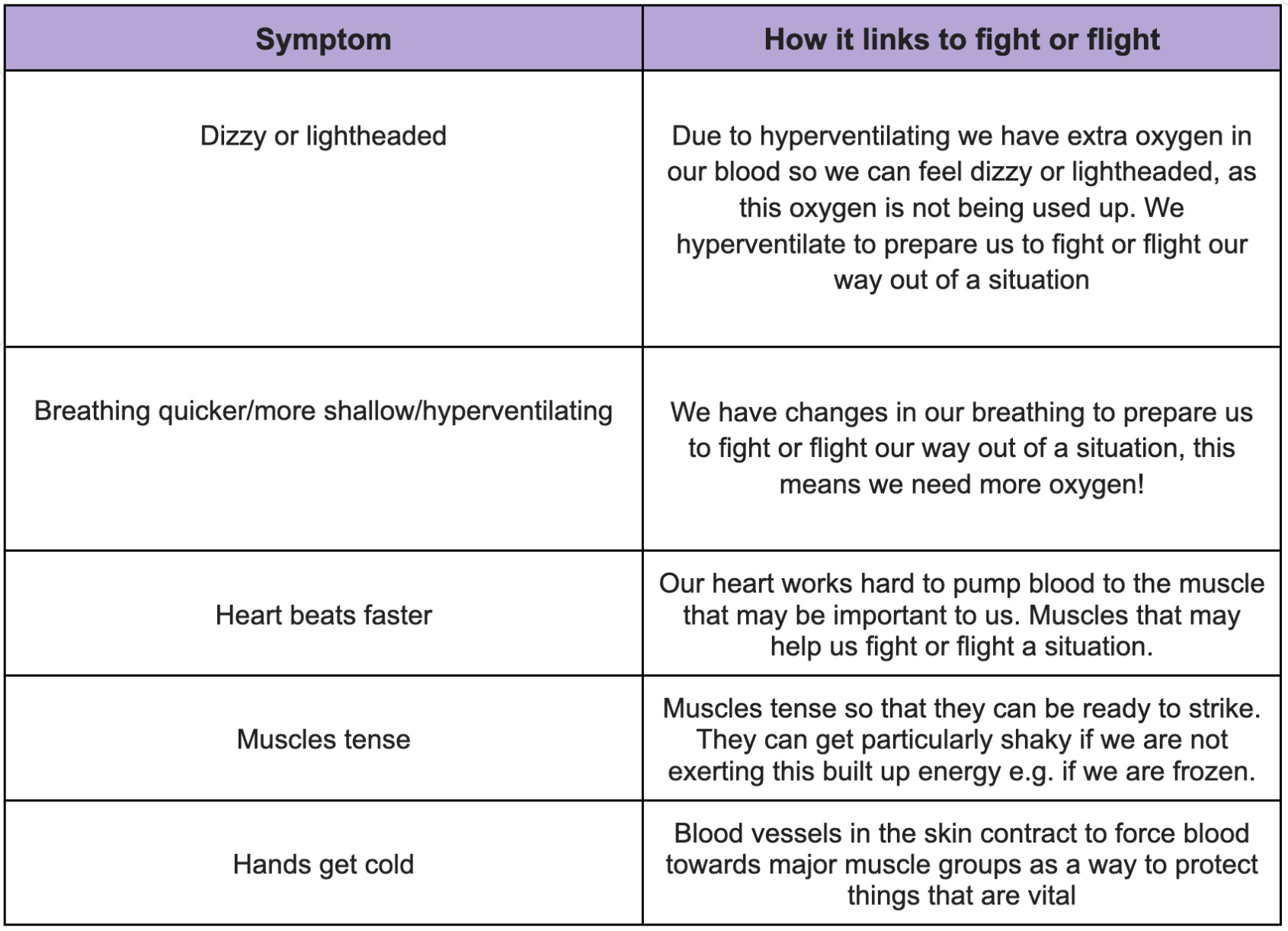
So the difference is that panic attacks are intense physiological and psychological symptoms but panic disorder has the addition of a catastrophic misinterpretation. What other symptoms would you like to know how they link to the fight or flight response? Comment below!
Thanks,
Ffion
References
https://www.psychologytools.com/self-help/panic-attacks-and-panic-disorder/